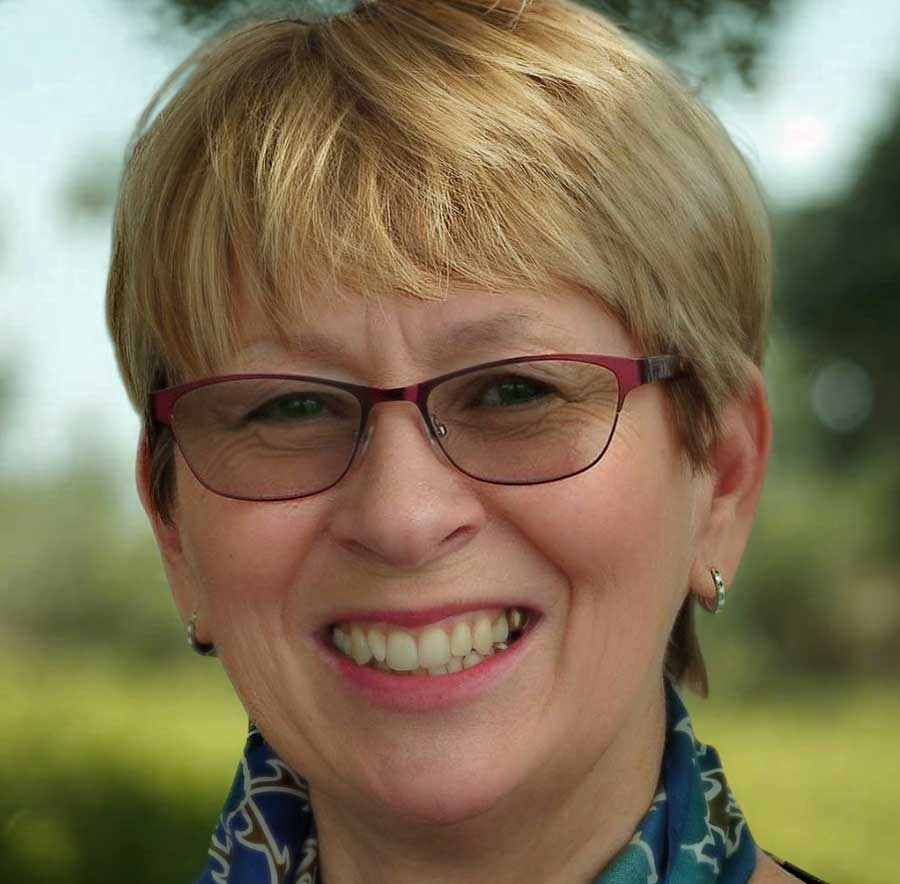
About Pat Bone
Below is the transcript of interview conducted with Pat in 2005.
Pat Bone – Original Member of MediHerb and Administrator of the Australian College of Phytotherapy
From 1986 Pat Bone worked with her husband, Kerry Bone on the new herbal manufacturing business which became MediHerb. Pat continued to work with MediHerb in a management role until 1998. At this time, and with her valuable background in education, she assisted Kerry in the establishment of the Australian College of Phytotherapy.
The Australian College of Phytotherapy provided clinically oriented, post-graduate courses of recognised excellence in Western herbal medicine. A particular focus of the college was to update and develop courses to ensure that the quality of the training is maintained and to ensure the effective delivery to a wide range of students.
Q. Pat, You were there from the start of MediHerb. Could you tell us how Kerry first got into the herbal manufacturing business and what your role was?
A. MediHerb really began as a result of Kerry's dissatisfaction with the liquid herbal products that were on the market at the time. He was trying to establish his clinical practice and found that the preparations he made himself were better than those he was able to buy. His background as an industrial chemist meant he had an understanding of the chemistry of what he was doing and that was resulting in very good quality extracts. So, when some business people offered to back us in setting up a company, we thought it sounded like a good idea. Little did we know what lay in store!
Whenever I think of the early days at MediHerb I recall the way we all had to "multi-task" in a major way. Everyone filled orders, topped up the percolators, did bottling, and helped out generally. Our "office/workroom" was so small that everyone naturally got involved in whatever anyone else was doing, including their telephone conversations! For the first three years Kerry and I worked seven days a week and didn't take any vacations. We ate, drank and breathed MediHerb. Whenever a member of our family came to visit they always got drawn into the MediHerb project and ended up helping out and returning home from their "holiday" exhausted.
They were phenomenally exciting times with lots of ups and downs. When we received three orders in one day we were over the moon. But even the smallest customer complaint would rattle us all for days!
Q. You became responsible for leading the Customer Service section. What sort of issues did you deal with in those early days?
A. In time I stopped helping top up the percolators and so on and focussed on customer service. I did this deliberately as I believed that no matter how brilliant the product and the education was, if the customers were not looked after well they would go elsewhere- and all that effort would be in vain. We went to extraordinary lengths to assist customers. For example, we would all work extra during weekends to get a large order ready to be shipped overseas. Other times we would pull out a 20-kg bale of dried herb to measure out 250 g for a customer who had one patient who desperately needed it. We were forever rushing urgent orders off to the post office and seemed to have one staff member permanently "down the street" mailing off orders at any given time.
Q. Pat, tell us about your current role in the Australian College of Phytotherapy. What gives you the most job satisfaction?
A. I resigned from the MediHerb Board of Directors and left the company in 1998 to concentrate on the Australian College of Phytotherapy. Kerry and I established the College in order to provide a specialist education in Western herbal practice. MediHerb's marketing has always been oriented toward education since that reflected Kerry's main professional interest, and his understanding that a grasp of the technical issues were vital. We were constantly receiving feedback from customers that they loved the seminars but wanted a more in-depth program. So it seemed like the right time to extend our work into that specific area. We created a number of post-graduate, distance education courses for qualified health professionals that teach only clinical herbal practice. These have been very well received and we get fantastic feedback from our students, particularly our U.S. students who love the way the course material delivers them the information and skills they need.
In recognition of the need for a high level course in herbal education, we approached the University of New England with the idea to create Master of Health Science (Herbal Medicine). They were extremely interested and worked with us over a number of years to set up the course. We now offer what we believe to be the only clinical herbal Masters program in the world.
Both Kerry and I draw tremendous inspiration from our customers, our students, and our co-workers. Knowing that these groups of people in many different parts of the world are working toward providing quality herbal care for patients gives me a great sense of satisfaction.